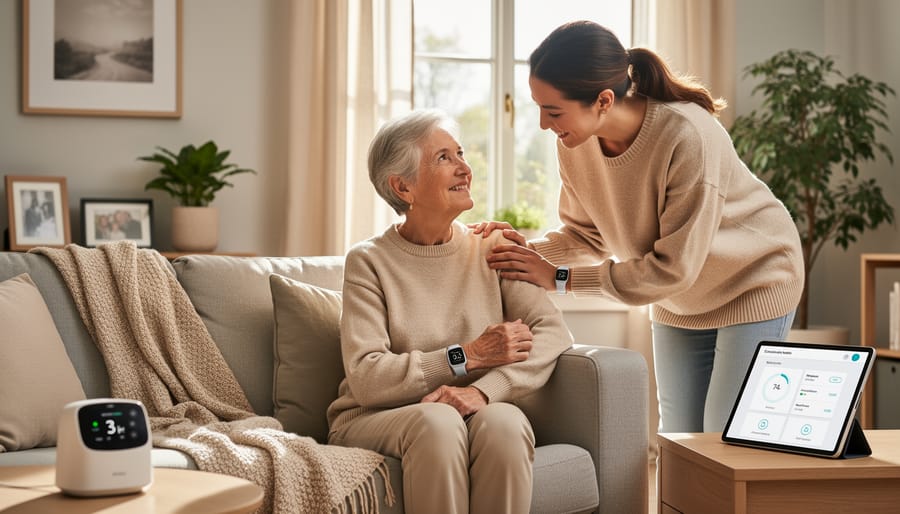
Elderly health monitoring allows you to keep an aging parent safe while preserving their independence through technology, routine check-ins, and professional support that catches small changes before they become emergencies. At its core, monitoring means creating a system that alerts you to potential problems early, giving your loved one the best chance at aging in place with dignity.
When your mother starts forgetting to take her blood pressure medication or your father has a close call on the stairs, you face a difficult question: how do you help without hovering? The answer lies in building the right combination of tools and touchpoints that match your parent’s specific needs and comfort level.
Monitoring doesn’t mean installing cameras in every room or calling three times a day. It means understanding which health markers matter most for your parent’s conditions, knowing what changes require attention, and having a plan when something seems off. For some families, this looks like a medical alert device and weekly video calls. For others, it involves medication reminders, fall sensors, or regular visits from a home health aide.
The goal isn’t surveillance. It’s creating peace of mind for everyone involved while giving your parent the freedom to live their daily life. You’re looking for patterns that signal a developing issue, like sudden weight loss, increased confusion, or mobility changes, so you can respond thoughtfully rather than react to a crisis.
Successful monitoring respects your parent’s autonomy while acknowledging that staying truly independent sometimes means accepting the right kind of help.
What Elderly Health Monitoring Actually Means for Your Family
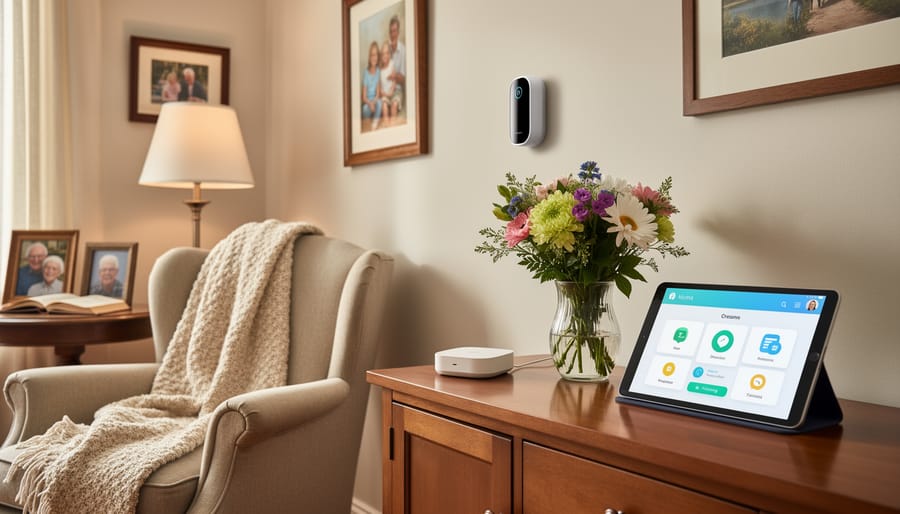
When you hear “health monitoring,” your mind might jump to hospital equipment or constant surveillance. The reality is much more practical and reassuring. Think of it as having an extra set of eyes that notice the small changes that matter, shifts in routine, subtle health indicators, or early warning signs, before they become urgent problems.
Health monitoring encompasses several interconnected areas of daily life. It tracks vital signs like blood pressure, heart rate, and oxygen levels, particularly important for seniors managing chronic conditions. It observes daily activity patterns: when someone wakes, moves around their home, eats meals, and goes to bed. These rhythms tell a story about overall wellbeing that pure medical data can’t capture alone.
Medication adherence is another critical piece. Many seniors manage multiple prescriptions with complex schedules, and missed doses or accidental double-doses create real risks. Monitoring systems can provide reminders and track whether medications were actually taken, reducing these dangers significantly.
Fall detection rounds out the picture, offering immediate alerts if someone takes a tumble when nobody’s there to help. But perhaps the most valuable aspect is tracking behavioral changes: sleeping much more or less than usual, skipping regular activities, or moving noticeably slower. These patterns often signal health issues developing quietly in the background, giving families and caregivers time to respond thoughtfully rather than react to a crisis.
The Key Components of Effective Senior Health Monitoring
Vital Signs and Physical Health Tracking
Your loved one’s body constantly sends signals about their health, and tracking vital signs helps you catch warning signs before they turn into emergencies. Blood pressure monitoring shows whether the heart and blood vessels are working too hard or if medications need adjusting. Heart rate tracking reveals whether the heart is beating too fast, too slow, or irregularly, which might indicate new cardiac issues or medication side effects.
Temperature monitoring isn’t just about catching fevers. Persistent low-grade temperature changes can signal brewing infections, while lower-than-normal readings might suggest poor circulation or thyroid problems. Oxygen saturation levels measure how well the lungs are delivering oxygen to the blood, a critical indicator for seniors with respiratory conditions like COPD or heart failure.
These measurements matter most when they reveal patterns rather than isolated readings. A single high blood pressure reading might mean nothing, but consistently elevated numbers suggest it’s time to call the doctor. Changes in vital signs for deterioration often appear gradually, giving families and caregivers valuable time to respond before a health crisis develops.
Modern monitoring systems make tracking these vitals simple, with automated devices that take readings on schedule and share them with family members who can’t be there in person.
Daily Activity and Mobility Patterns
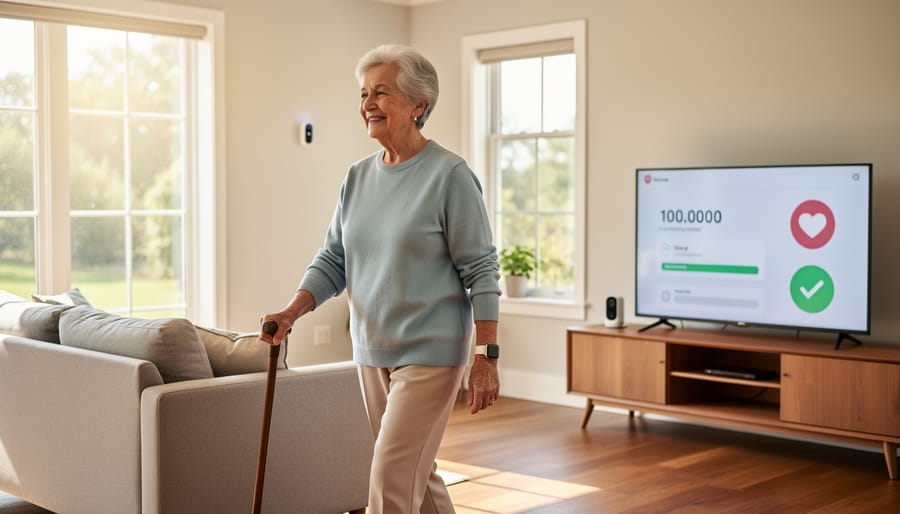
Tracking how your loved one moves throughout their day offers surprisingly revealing insights into their overall health. A monitoring system notices patterns you might miss during short visits: when Mom gets up each morning, how often she moves around during the day, whether she’s sleeping restlessly at night, or if her usual afternoon walk to the mailbox has become irregular.
These patterns matter because changes often appear gradually. Maybe Dad used to make trips to the kitchen six times each morning but now only goes twice. Perhaps nighttime bathroom visits have doubled, suggesting a possible urinary issue worth mentioning to his doctor. A senior who’s always been active but suddenly spends most afternoons sitting might be experiencing pain, fatigue, or early signs of illness.
The beauty of activity monitoring is how it supports engagement with safe physical activities by establishing what’s normal for your loved one. When caregivers or family members understand someone’s baseline activity level, they can spot meaningful deviations early and respond appropriately, whether that means a simple check-in call or scheduling a medical evaluation.
Medication Management and Reminders
Medication errors remain one of the most common health risks for seniors managing multiple prescriptions. Modern monitoring solutions address this through automated reminders, visual confirmation of doses taken, and alerts when medications are missed. Some systems use pill dispensers that light up or beep at scheduled times, while others send text messages to both seniors and family members. Professional medication reminder services often include video check-ins where caregivers can verify that medications were taken properly. Studies indicate that apps improve adherence rates significantly compared to memory alone. The real value comes when monitoring systems catch patterns like frequently missed evening doses or confusion about similar-looking pills, allowing adjustments before health complications develop.
Communication and Alert Systems
Modern monitoring platforms send updates when they matter most. You can receive notifications about significant health changes, a concerning blood pressure reading, an unusual sleep pattern, or a missed medication, without constant pings about normal daily activities.
Most systems let you customize which alerts you receive and when. Your sister might want immediate notifications about falls, while you prefer a daily summary email unless something urgent happens. This flexibility prevents alert fatigue while ensuring the right people know about important changes.
Regular updates typically come as scheduled reports rather than constant messages. You might see a weekly summary showing your father’s activity levels, medication adherence, and vital sign trends. These patterns often reveal meaningful changes that individual measurements miss.
The best communication systems also let your loved one control what’s shared and with whom, respecting their privacy while keeping everyone informed enough to help when needed.
When to Consider Health Monitoring for Your Loved One
Recognizing when health monitoring could benefit your loved one isn’t about waiting for a crisis. The families who tell us they wish they’d started sooner all share a common thread: they noticed small changes but weren’t sure if they warranted action.
If your parent manages chronic conditions like diabetes, heart disease, or COPD, monitoring provides the daily oversight these conditions require. Small variations in vital signs or medication timing can make a significant difference in outcomes, and monitoring catches these shifts early.
The weeks following hospitalization represent a particularly vulnerable period. Seniors returning home after medical treatment need closer observation, but few families can provide constant supervision. Health monitoring bridges this gap, alerting caregivers to warning signs like declining mobility or missed medications that might lead to readmission.
Living alone doesn’t mean a senior lacks independence, but it does create legitimate safety concerns. If your parent spends significant time by themselves, monitoring offers reassurance to everyone. You’ll know about falls, changes in daily patterns, or other issues that might otherwise go unnoticed for hours or days.
Memory concerns call for a thoughtful approach. When forgetfulness begins affecting medication management or daily routines, monitoring provides gentle reminders and tracks adherence patterns. For families navigating dementia, appropriate support for Alzheimer’s often includes monitoring as one component of comprehensive care.
Managing multiple medications increases complexity and risk. If your loved one takes several prescriptions with different schedules, monitoring systems can prompt correct timing and help prevent dangerous interactions or missed doses.
The truth many families discover: starting monitoring while your parent still feels well preserves more independence than waiting until problems force more intrusive interventions. Early adoption means learning the technology together when there’s less stress, establishing baselines when health is stable, and making gradual adjustments rather than crisis-driven changes.
How Professional Caregivers Use Monitoring to Support Senior Independence
Professional caregivers transform raw monitoring data into personalized support that helps seniors stay in their homes longer. Instead of checking in only during scheduled visits, caregivers who use health monitoring can spot subtle changes days before they become problems. When a senior’s activity pattern shifts or vital signs trend outside their normal range, caregivers can investigate during their next visit rather than discovering a crisis weeks later.
This proactive approach made all the difference for Margaret, an 82-year-old widow living alone in her Portland home. Her daughter lived two states away and worried constantly about falls and missed medications. When Margaret started working with a caregiver who used health monitoring, the system tracked her daily routines, medication times, and movement patterns. Three months in, the caregiver noticed Margaret’s morning activity was starting an hour later than usual and her evening blood pressure readings were creeping higher. During the next visit, the caregiver discovered Margaret had been skipping her morning walk because of ankle pain she hadn’t mentioned. A simple adjustment to her medication schedule and some targeted exercises solved both issues before they escalated.
Professional caregivers use monitoring insights to have informed conversations rather than making assumptions. They can say, “I noticed you’ve been up several times at night this week. How are you sleeping?” instead of generic check-ins. This specificity helps seniors feel truly seen and supported. The data also helps caregivers recognize when a senior’s needs are changing, allowing them to adjust care plans before independence is compromised. When families receive regular updates grounded in actual monitoring data rather than guesswork, everyone feels more confident about the senior’s safety at home.
Choosing the Right Monitoring Approach for Your Situation
Start by having an honest conversation with your loved one about what feels comfortable and what worries them most. Some seniors welcome the security of comprehensive tracking systems, while others prefer minimal oversight with emergency alerts only.
Consider your parent’s daily routine and actual needs rather than every possible scenario. Someone managing diabetes needs different monitoring than someone recovering from a fall. Living alone versus having a spouse changes the equation, as does proximity to family members who can respond quickly.
Budget matters, but don’t automatically default to the cheapest option. A system no one uses wastes money regardless of cost. Many families start with basic fall detection and medication reminders, then add features as needs change or comfort with the technology grows.
Technology comfort varies wildly among seniors. If your parent struggles with smartphones, a monitoring system requiring app navigation won’t help during an emergency. Look for solutions matching their current abilities, not what they might learn eventually.
Privacy concerns deserve serious consideration. Some seniors accept bedroom monitoring for fall detection while others find it invasive. Finding the balance between safety and dignity often means choosing targeted monitoring over comprehensive surveillance. When you can show how a specific feature addresses a real concern without constant oversight, acceptance increases dramatically.
Making Health Monitoring Work in Everyday Life
The key to successful health monitoring isn’t the technology, it’s creating routines that fit naturally into your loved one’s life.
Start by setting realistic expectations with everyone involved. Health monitoring provides valuable information and peace of mind, but it won’t catch every possible issue instantly. Think of it as an additional layer of safety, not a replacement for regular check-ins and healthcare visits. When you set up medication reminders or other monitoring features, explain clearly what they do and what they can’t do.
Create a simple communication routine that works for your family. Maybe you check the monitoring dashboard every morning with your coffee, or your siblings take different days of the week. Decide together what kinds of alerts warrant an immediate call versus a next-day check-in. This prevents both unnecessary panic and dangerous delays.
Respect boundaries throughout the process. Your mom doesn’t need to know you’re checking her activity log at midnight because you couldn’t sleep. Keep conversations focused on support, not surveillance. “I noticed you were up early this morning, everything okay?” feels different than “The system shows you got up at 3:47 am.”
Finally, review and adjust regularly. Your dad’s monitoring needs after a hospital stay will look different six months later when he’s stronger. Check in quarterly about what’s helping and what feels intrusive, and be willing to scale back monitoring as independence increases.
Common Concerns About Health Monitoring (And What Actually Happens)
Many families hesitate before starting health monitoring, worried about invasion of privacy, overwhelming their loved one with technology, or inadvertently diminishing independence. These concerns are completely understandable, and they deserve honest answers about what monitoring actually looks like in practice.
Privacy is often the first worry that comes up. Families wonder if monitoring means constant surveillance or cameras everywhere. In reality, most health monitoring tracks patterns and measurements, not conversations or activities. A blood pressure reading or a notification that morning medication was taken doesn’t reveal personal details. Many systems allow seniors to control when certain features are active, and reputable monitoring services maintain strict privacy protections for all health data.
The fear that technology will overwhelm a senior is common, especially when someone hasn’t used much technology before. What actually happens is often surprising. Most monitoring systems are designed specifically for seniors, with large buttons, simple interfaces, and minimal steps required. Many seniors only interact with a wearable device or medication dispenser, while family members handle the more complex monitoring dashboard. Caregivers also provide hands-on help during the adjustment period, which typically lasts just a few days.
Will health monitoring send constant false alarms?
Modern systems use smart algorithms to reduce false alerts, and thresholds can be adjusted based on your loved one’s normal patterns. Most families report that alerts become more accurate within the first few weeks as the system learns individual baselines.
Is health monitoring affordable for most families?
Monitoring costs vary widely, from basic medication reminders at minimal cost to comprehensive systems. Many families find that monitoring actually reduces expenses by preventing emergency room visits and hospitalizations.
Does monitoring make seniors feel like they’re losing independence?
When introduced thoughtfully and with senior input, monitoring often does the opposite. Many seniors feel more confident living independently because they know help is available if needed.
Cost concerns are real, but context matters. While monitoring does involve expenses, many families discover it’s far less costly than they expected, especially when compared to the price of assisted living or frequent emergency interventions. Some insurance plans and Medicare Advantage programs now cover certain monitoring devices and services.
The loss of independence fear cuts deepest because no one wants to make a loved one feel controlled or incapable. What families often discover is that monitoring can actually extend independence. A senior who knows that irregular heart rhythms will be caught early may feel more confident going for walks. Someone whose family can check in through monitoring data rather than constant phone calls often appreciates the reduced intrusion into daily life.
Health monitoring isn’t about taking control away from your loved one. It’s about giving everyone the confidence to embrace independence safely. When you know your parent’s vital signs are stable, their medications are managed, and any concerning changes will reach you promptly, you can support their autonomy instead of worrying constantly.
The right monitoring approach becomes part of daily life without dominating it. Your loved one continues their routines, makes their own choices, and lives in their own home. You stay connected and informed without constant check-in calls. Professional caregivers can respond to subtle changes before they become crises.
OCSCO’s approach to senior health monitoring reflects this balance. We believe families deserve to know their loved ones are safe and well, while seniors deserve to maintain their dignity and independence. Our medication assistance and health monitoring services keep families connected without being intrusive, providing the information you need when you need it.
If you’re considering monitoring for someone you love, start the conversation today. The peace of mind it brings benefits everyone, and the earlier you begin, the more natural it becomes part of your family’s care routine.